
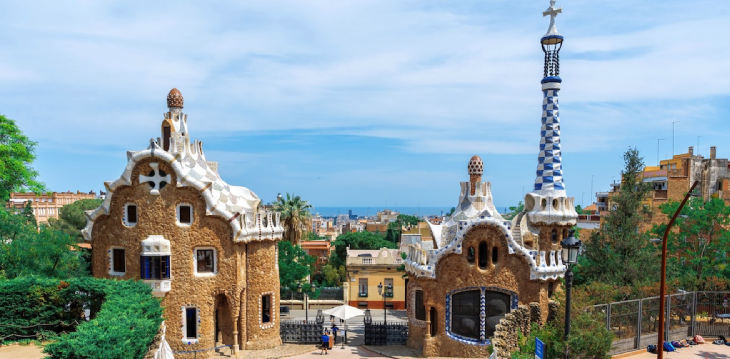
Spain is a vibrant Southern European country in the EU and Schengen Area, famous for its rich culture, sunny climate, historic cities, and high quality of life. It offers affordable, high-quality education with EU-recognized degrees, strong programs in business, engineering, tourism, health sciences, arts, and humanities. For Indian students, Spain provides a growing number of English-taught programs, low tuition at public universities, a welcoming environment, part-time work rights, and a generous post-study stay option. It is an excellent, cost-effective EU destination with Mediterranean lifestyle and easy access to other European countries.
| Capital: | Madrid |
| Language: | Spanish |
| Currency: | Euro (€) |
| Popular Cities: | Madrid, Barcelona, Valencia, Seville, Granada, Bilbao |
| Population: | Approximately 48 million |
| Indian Population: | Around 67,000+ people of Indian origin |
Student Visa
Tourist Visa
Business Visa
Dependent Visa
Spain attracts Indian students with its affordable tuition at public universities, lively student life, and cultural richness. Key advantages include:
Tuition fees for non-EU students at public universities typically range from €750 to €4,500 per year (average €1,000–€3,500 for most programs).
Private universities and specialized programs (e.g., business schools) charge €5,000–€20,000+ per year.
Breakdown (approximate):
For the long-stay student visa (Type D), you must prove sufficient financial means of at least €600 per month of stay (100% of IPREM index).
Proof can be via bank statements (last 3–6 months), sponsor documents (notarized sponsorship letter with sponsor’s financial proof), scholarship, or combination.
Accommodation proof may reduce the required amount slightly. Health insurance (€30,000+ coverage) is mandatory.
International students on a student visa for higher education can work up to 30 hours per week
After graduation, you can apply for a job-seeker or professional integration residence permit allowing you to stay for up to 1 year to search for a job or start a business. You can work full-time during this period. Once employed, transition to a work permit or EU Blue Card.
Permanent residency generally requires 5 years of continuous legal residence. Study time may count partially; subsequent work periods help accumulate qualifying time faster.
After PR, citizenship is possible with further requirements. Rules can update — always check official sources like exteriores.gob.es or the Spanish consulate.
Where do you want to study?