
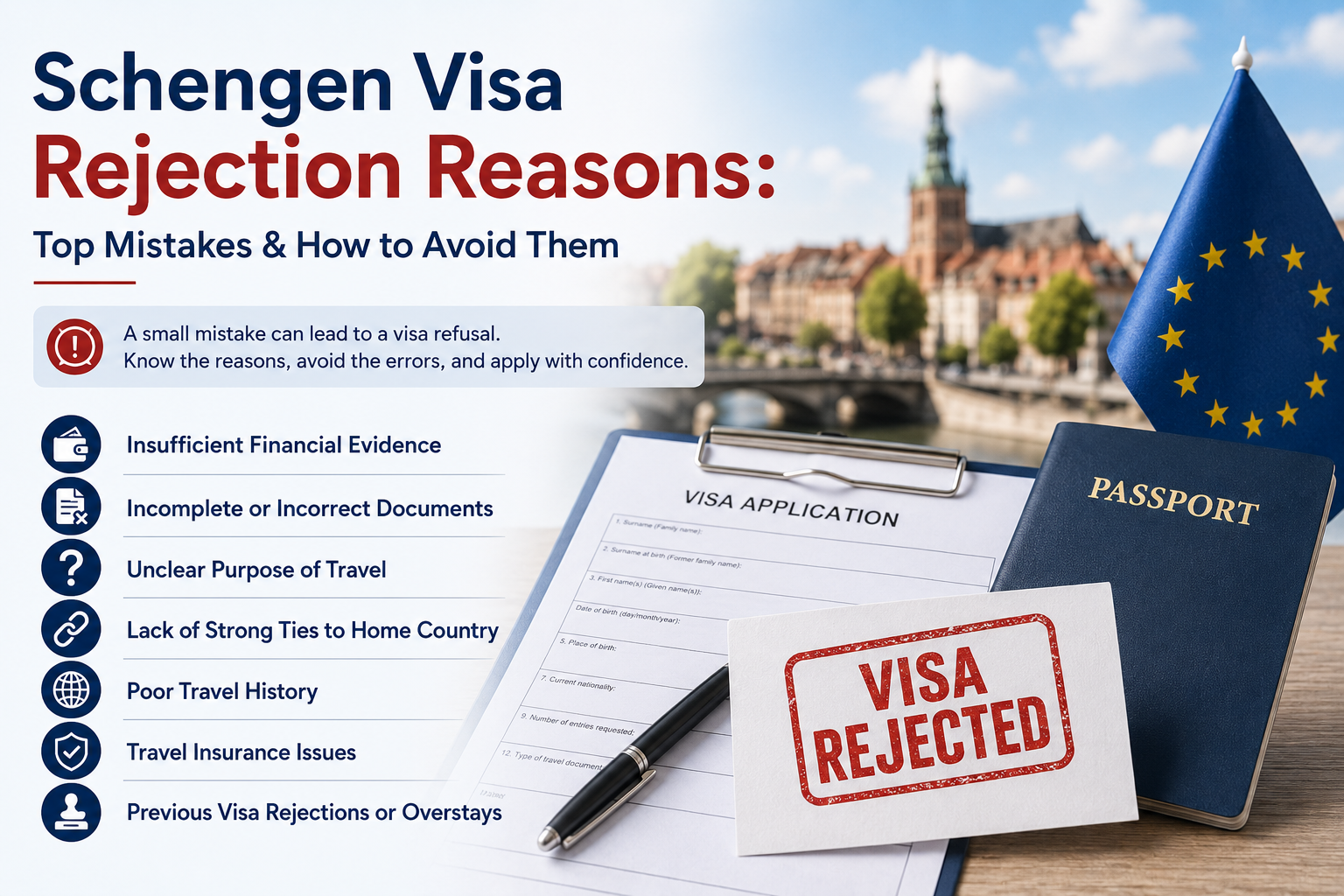
The application process for a Schengen Visa may be filled with enthusiasm; however, if your application is unsuccessful, disappointment and frustration will often follow. Every year, many people apply for Schengen Visas and receive a refusal due to mistakes that could be avoided, such as not submitting all required documents or unclear travel plans.
Understanding the reason for Schengen visa rejection is important before applying or reapplying for a visa. Many applicants face Schengen visa rejection because of avoidable documentation errors, weak financial proof, or unclear travel intentions. Learning the common Schengen visa rejection reasons can help travelers prepare stronger applications and improve their chances of approval.
If you are looking for a reason why you may have received a Schengen Visa rejection, then by reading through this guide, you will find answers regarding:
Why Schengen Visas are rejected
Common refusal codes
What to do once you've received a refusal letter
How to increase the chance of being granted a Schengen Visa
A Schengen visa denial or refusal means that an embassy or consulate has determined that your application does not comply with the Schengen Visa Code's mandatory rules and requirements. When this happens, you will receive a letter from the embassy or consulate, which will provide several reasons or codes explaining why your application was denied or refused.
The reasons mentioned below must be ascertained before reapplying.
Below are the most common Schengen visa rejection reasons that applicants usually face:
A prevalent cause of rejection for a Schengen Visa application is the absence of sufficient financial support. Visa officers want to see that an applicant has adequate financial resources to provide for themselves so they don’t require unlawful employment while staying in the Schengen Area.
Embassies want the applicant to demonstrate that they can:
Fund their trip
Cover the cost of accommodation
Maintain their expenses during their visit
Some common mistakes that cause a visa application to be rejected are:
Insufficient funds
A large deposit that was unexpectedly made, with no proof of how or where the funds were acquired
Unverifiable or unacceptable documents related to finances
Important Note:
Always include honest bank statements covering the last 6 months, and make sure the amount in your bank account is consistent with all other respective banking accounts, with no major changes.
Missing or inaccurate information can lead to immediate rejection.
Examples:
Missing cover letter
Incorrect application form
Invalid passport
Fake hotel bookings or flight tickets
A small error in the documentation may also have a negative impact.
Even small documentation mistakes can become a major reason for Schengen visa rejection if the embassy finds inconsistencies in the application.
If the visa officer is not convinced about the reason for traveling, then your application could be rejected.
This usually happens when:
The cover letter is vague
The travel itinerary is unclear
Supporting documents do not correspond with your intended purpose
Your travel plan must be logical, detailed, and verifiable.
Visa officers evaluate if you will return after the trip. They might be concerned if you have weak ties.
Strong ties include:
Stable job or business
Family responsibilities
Property ownership
Ongoing education
If these bonds have not been sufficiently indicated, rejection will probably follow.
If you have little or no experience traveling internationally, or if you have a limited travel history, this may affect your chances of being approved for a Schengen visa as a new applicant.
This is not to say that people will not be approved for a Schengen visa simply because they are new travelers, but your lack of travel history will be more important and require the need for more documentation to justify your visit.
Although first-time travelers can still get approval, weak travel history may sometimes contribute to Schengen visa rejection reasons considered by visa officers.
It is required that you have travel insurance for the Schengen visa. There are three reasons why you would be denied travel insurance to the Schengen region:
The amount of your travel insurance will not cover your entire stay in the Schengen region
Your travel insurance company does not cover you in all of the Schengen countries
Your travel insurance policy dates do not match the dates of travel
It is important to note that you need to have a minimum of €30,000 travel insurance covering all Schengen countries.
Incorrect travel insurance coverage is another common reason for Schengen visa rejection during document verification.
Previous denials of visa application and/or overstays or other immigration violations will affect your chances of getting approved for a Schengen visa if you do not address these issues in your new application.
Many applicants worry about the chances of getting Schengen visa after rejection. In most situations, applicants can still receive approval if they address previous mistakes, submit genuine documents, and provide stronger supporting evidence in their new application.
The denial letter from the consulate will have the following codes on it:
Code 1: Purpose of travel not justified
Code 2: Insufficient financial means
Code 3: Failure to justify purpose of stay
Code 9: Risk of illegal immigration
Code 10: Not possessing enough travel insurance for travel to Schengen area
This is very helpful to know when building a case for the new application!
If you have received a Schengen visa rejection, there are three options available to you:
Appeal the refusal by filing an appeal within the time limit. However, this will only succeed if you have strong evidence backing your appeal
Reapply for your visa using corrected information if you found mistakes in your application
Consult with a professional visa consultancy that will help determine why your visa was refused as well as assist in determining which steps should be taken next
To help decrease the chance that your visa application will be refused, follow the tips below:
Ensure that all supporting documents submitted with your visa application are genuine and complete
Maintain accurate documentation of all financial resources
Provide a comprehensive cover letter with your application
Explain how you will travel to Europe and return home after your visit
Do not use false booking confirmations, as they can lead to your application being rejected
If you are unsure about your application or have questions, consult an expert in the area of visas or immigration prior to applying for a visa
Understanding common Schengen visa rejection reasons can help applicants prepare accurate applications and avoid unnecessary visa refusals.
Golden Future is an expert at providing assistance in the following areas:
Analysis of rejections
Documents authentication
Letter of explanation & travel plans
Strategy correction for re-application
With the guidance of experts, we will work with you to meet required embassy standards by minimizing the risk of refusal for your visa application. If you have recently been denied a Schengen visa, please don't hesitate to reach out to us so that our expert could evaluate the situation and assist with your re-application.
Here is how you can minimize unnecessary errors:
Q1. Can I reapply for a Schengen visa after being rejected?
Once again, you can always submit another application for a Schengen visa; just be sure to fix the errors that caused the prior rejection.
Q2. Do previous refusals impact future applications?
Yes. But with the proper documentation and explanation, they can be mitigated.
Q3. Is it more advantageous to appeal or resubmit my application for a Schengen visa?
Generally speaking, it is significantly more beneficial to submit a new application with the updated corrections.
Q4. What are the chances of getting Schengen visa after rejection?
The chances of getting Schengen visa after rejection are good if the applicant corrects previous mistakes, submits complete documentation, and clearly explains the purpose of travel during reapplication.
Q5. What is the most common reason for Schengen visa rejection?
The most common reason for Schengen visa rejection includes insufficient financial proof, incomplete documents, unclear travel plans, and weak ties to the home country.
If you wish to increase your odds of receiving a Schengen Visa, you should familiarize yourself with the reasons applications may be denied. Understanding how a Schengen visa application could be rejected allows you to resolve shortcomings before submitting your application. Many visa rejections occur because the applicant fails to present a complete application package or comply with the specific guidelines required by the Embassy.
By understanding the most common Schengen visa rejection reasons, applicants can avoid repeated mistakes and prepare stronger visa applications. Correcting the exact reason for Schengen visa rejection can significantly improve the chances of getting Schengen visa after rejection.
A Schengen Visa can be obtained by following the proper procedures and providing the appropriate support materials. Golden Future provides visa consultancy and has extensive knowledge and competence in providing individualized assistance to clients to ensure that they are submitting complete and valid applications for a Schengen Visa.
For professional assistance in obtaining a Schengen Visa, please contact Golden Future.